Your greatest work
is next.
Community, tools, and programs to help experienced professionals become first-time entrepreneurs
A new era of entrepreneurship.
Galvanizing a community of millions of entrepreneurs building in the second half of life.
You have the expertise, the network, and the drive.
What you need is the tools, methodology, and peer community to make the leap.
Three forces converging.
Longevity & Population Aging
130M Americans will be 50+ by 2031. Extended healthspans mean decades of productive years ahead.
The AI Revolution
AI is disrupting employment. But the same AI that displaces also enables. Non-technical leaders can now leverage AI to build and scale businesses — keeping teams small and costs low.
Older Founders Win
Research from MIT and Harvard: a 50-year-old founder is 1.8× more likely to build a successful company than a 30-year-old.
Three programs, meeting you where you are.
We're inviting members to apply to our programs. Each one is built for a different stage of the leap — from still deciding, to ready to go it alone, to ready to build something bigger.
Discovery
- A confidential peer group at your exact stage and decision point
- Clarity on build, buy, or neither, without committing first
- No pressure, no fixed end date — stay until you're ready
Solo
- Reduce your startup expenses and lower your risk
- Define your mission & vision, brand positioning, and a viable business model
- Mobilize toward first customers to accelerate time to revenue
- A path into the Incubator if the venture outgrows Solo
Incubator
| Feature | Discovery | Solo | Incubator |
|---|---|---|---|
| Peer community | ✓ | ✓ | ✓ |
| Curriculum & frameworks | Lite | Core | Full |
| Advisors & Operating System | — | Core | Full |
| Mentorship | — | Core | Full |
| Capital support | — | — | ✓ |
Common questions.
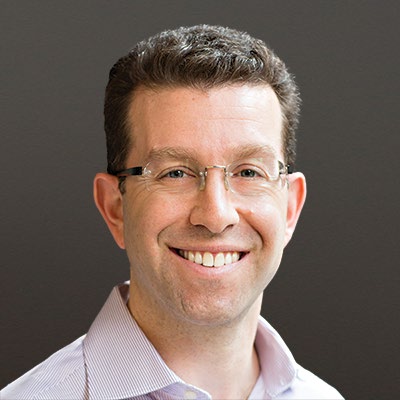
Stuart Roth
Founder & Managing Director
I've made several career transitions and co-founded a VC-backed startup in my mid-40s. I know what it takes to make the leap from executive to entrepreneur – it's different than starting a venture in your 20s. Few entrepreneurship programs and resources exist with the late career professional in mind. That's the gap 2nd Half Ventures fills.
Latest thinking.
The Great Leveling: Why a New Wave of Startups Will Be Built by "Old Fogies"
The data shows the most successful founders launch their best ventures in their mid-forties, not their mid-twenties. As no-code and AI tools crumble the technical barrier, experienced professionals are finally positioned to translate decades of domain expertise into fundable, scalable companies.
Your Transition Is Not a Crisis. It's Rejuvenation.
A career transition doesn't just bring stress — it resets the psychological conditions that make new habits, old friendships, and reinvention easier than they've been in years. Habit science, dormant-tie research, and a few famous second acts back it up.
It's Cheaper to Build the Thing Than Have a Meeting on the Thing
Peter Diamandis and Salim Ismail argue that AI makes coordination nearly free. That plays to the advantage of experienced founders who bring judgment and a trusted network — not against them.